
How Arrest Warrants Work in Lawrence County
An arrest warrant is a judge's command that authorizes police to take a named person into custody. Indiana places the procedure in Title 35 of its criminal statutes. The order rests on a legal finding, never on a web listing. Lawrence County's local trial courts are Lawrence Circuit Court and Superior Courts I and II, as the state Odyssey directory shows. The judge issues the order. The Clerk keeps the court records. The sheriff or police may execute it. Once someone is in custody, the Security Center reports the booking, charge, and bond. Keeping those roles straight matters. Ask the Clerk for records, the court for status, and the jail for custody, and the answers come back accurate.
Indiana Arrest Warrant Law
The official Indiana Code Title 35 is the statutory starting point for criminal procedure in Lawrence County. It holds the arrest-warrant law itself. The government source leads to the code, not a commercial name list.
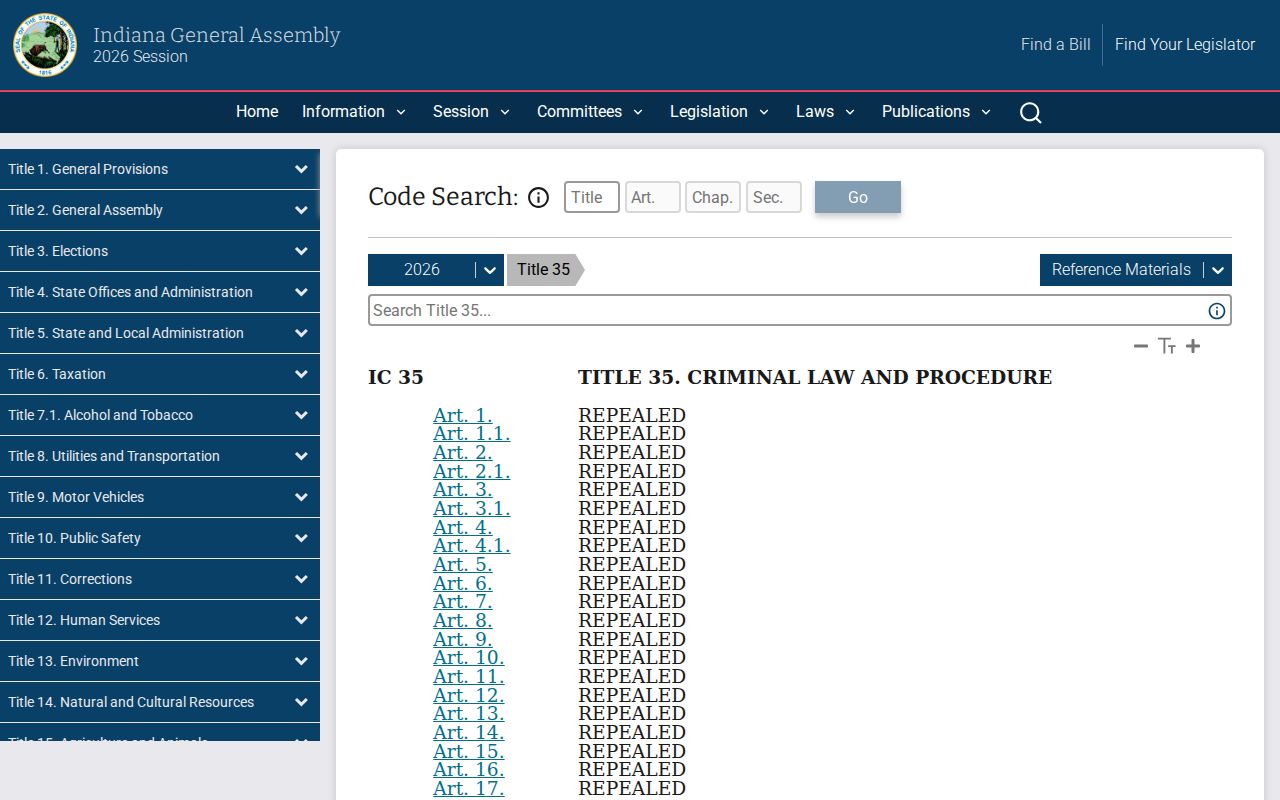
Statutory text explains authority and process. It cannot tell you whether a particular Lawrence County warrant is still active. Read the code for meaning, then turn to MyCase, the Clerk, and the issuing court for the record.
Arrest Warrants: What They Contain
A warrant or its public case entry may list the court, case number, person named, alleged offense, issue date, judge, and instructions to the serving officer. A later docket entry may show service, an initial hearing, bond activity, or a recall. The document itself may not be online even when a docket entry is. Two terms come up often. Probable cause is a legally sufficient basis to believe an offense occurred and that the named person committed it; an affidavit is the sworn written statement supporting that finding. Some affidavits and entries are sealed or temporarily restricted, and personal identifiers get redacted. One caution for any Lawrence County warrant search: never treat a search-engine excerpt as the official order. That gap belongs to the court, not Google.
Review Lawrence County Arrest Warrant Summaries
Start with Indiana MyCase and a known case number. A party search works too, using name and date of birth plus court, status, and date filters. Compare identifiers carefully. A shared name alone proves nothing. The chronological case summary, the CCS, lists every Lawrence County court event in date order.
- CCS
- The chronological case summary, which is the court’s event timeline.
- Probable cause
- The legal basis a judge evaluates before issuing an arrest warrant.
- Execution
- Law enforcement’s service of the warrant through an arrest.
- Recall
- The issuing court’s withdrawal of the warrant.
Indiana's official warrant FAQ says a warrant may appear in a case summary, yet MyCase offers no warrant-search option. So a Lawrence County lookup there is only a first read. Confirm anything unclear or urgent with the court. Save the date and exact wording of the public entry before calling. That detail lets staff find the right event fast, without deciphering a vague screen.
How Warrants Get Served in Lawrence County
The Lawrence County Sheriff, Bedford Police, Mitchell Police, or another agency with authority may serve an arrest warrant. Service is an agency action. Issuance is a court action. The sheriff posts no public warrant roster, runs no dedicated warrant unit, and offers no warrant-search phone line, so treat the general office as just that. It sits at 1420 I Street, Bedford, with general phone 812-275-3316. The Security Center line is 812-277-2014. Emergencies go to 911. If you believe an active warrant exists in Lawrence County, ask the court or your counsel about safe, lawful appearance options. Calling law enforcement promises nothing about avoiding arrest.
Lawrence County Arrest Warrant Custody Data
Myth: No current jail result means no arrest warrant. Fact: Jail data concerns custody, while an unserved warrant can exist in a court or law-enforcement system.
The county's inmate information channel can give charge and bond details for someone held at the Security Center. It sends court-appearance questions back to the court. That boundary is worth knowing. Custody, booking charge, bond, warrant issuance, and the next hearing are related facts, but they are not interchangeable. The Security Center opened in 1990, and county materials say an original 88-inmate design was modified to house 180 with 26 full-time officers. Those figures describe jail operations in Lawrence County, nothing more. They are not a count of warrants, arrests, or current inmates. A release from custody does not prove every order in every case has ended either. Check each known case separately.
Arrest Warrants, Summonses, and Bench Warrants
A summons orders a person to appear but skips the immediate custody step. An arrest warrant authorizes arrest after a judicial finding. A bench warrant in Lawrence County typically comes later, within an existing case, after an unmet court duty such as failure to appear. The labels differ even though each one ends at a courtroom door.
| Process | Typical basis | Immediate effect |
|---|---|---|
| Arrest warrant | Probable cause tied to an alleged offense | Authorizes arrest |
| Summons | Order to answer an allegation | Directs appearance |
| Bench warrant | Missed appearance or unmet court order | Authorizes custody under the order |
The docket always controls the answer. See Lawrence County bench warrant lookup when the concern started with a missed hearing or an existing case duty.
Federal Lawrence County Warrants
Federal warrants never show up in Indiana MyCase. That state portal simply does not reach them. Lawrence County sits inside the Southern District of Indiana, so federal matters there run on a separate track. To run a warrant lookup on that side, use PACER or the nationwide PACER Case Locator. Some secondary mirrors also carry public filings. The official docket is what verifies a federal warrant. The Southern District case information page spells out how CM/ECF and PACER access work. Sealed criminal entries stay invisible to unauthorized users. A blank state search does not rule out a federal case, and even the federal docket may reveal little, so contact the federal clerk or your lawyer about a known matter; the U.S. Marshals district page is jurisdictional background, not a public name-search database for Lawrence County.
Handling an Arrest Warrant in Your Name
Never evade a Lawrence County warrant or try to confront an officer yourself. Concealing evidence only deepens the trouble. Instead, pull the exact case facts and talk to a lawyer, who can walk you through voluntary appearance, bond, and the initial hearing. Court staff will share public record facts, but they cannot size up your legal risk.
- Search the known case and record its full number and court.
- Confirm public status with the Clerk or issuing court.
- Ask counsel about lawful appearance and bond options.
- If someone is in custody, use the jail channel for current charge and bond facts.
- After court action, verify the new docket entry instead of relying on a receipt alone.
Caution: A payment, phone call, or third-party promise does not by itself clear an arrest warrant. The issuing court’s record controls.
Restricted Lawrence Arrest Records
Some Lawrence County arrest records stay closed. Juvenile warrant files, along with their petitions, summonses, and identifying details, are generally confidential. Sealed affidavits and excluded documents can be withheld too. Indiana judicial access rules cover court files, while the Access to Public Records Act covers agency records, and neither grants a right to confidential material. The Lawrence County Clerk sits at 916 15th Street, Room 31, Bedford, phone 812-275-7543, email clerk@lawrencecounty.in.gov. A tight request should name the case, the court, the person, the date range, and the document sought. The Indiana public-records page cautions that online court information is not a full criminal-history report. A missing record can mean privacy rules, sealing, conversion limits, bad search terms, or simply no public match.